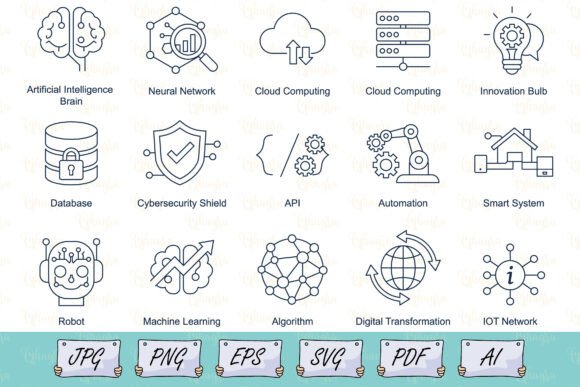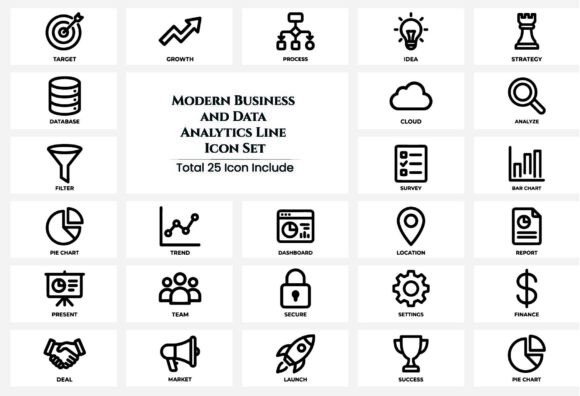
Modern Business and Data Analytics Line
When I first opened the folder for Modern Business and Data Analytics Line, I didn't just see a collection of icons; I saw a potential solution for a very specific client problem. As a designer who has spent years stitching everything from delicate baby bonnets to heavy-duty workwear, I know that not every digital graphic translates well into thread. This set promises clarity and versatility, but does it hold up when the needle starts moving? In this review, I am stepping away from the marketing copy to look at how these graphics actually perform in a real-world embroidery environment.
The immediate visual impression is one of sleek professionalism. The line art style is clean, utilizing thin strokes that suggest a modern office aesthetic rather than a corporate logo dump. It feels like something you would expect to see on a high-end dashboard or a financial report, which makes it an intriguing candidate for textile applications. However, translating "digital vector" to "physical stitch" requires a keen eye for detail. For a craft business owner or an Etsy seller looking to expand their inventory, understanding where this design fits—and where it might fail—is crucial before you commit to a production run.
From Screen to Stitch: A Real-World Scenario
Let's imagine a practical scenario. You are preparing for a holiday market season, and you want to create a custom embroidered tote bag for local entrepreneurs. The goal is to offer a product that speaks to their identity as data-driven professionals without being overly cluttered. You select Modern Business and Data Analytics Line to feature on the front panel of a canvas tote. The concept is simple: a stylized graph line or a network node icon stitched in navy blue thread on natural canvas.
In theory, this sounds perfect. The minimalist lines should read clearly against the textured fabric. But here is where the reality check happens. When I tested similar line-based designs on thick canvas, the fine details often got lost under the weight of the stabilizer or the tension of the stitches. If the design relies too heavily on tiny gaps between lines, the machine might bridge them unintentionally, creating a muddy blob instead of crisp data points. Conversely, if the lines are slightly too thick, they lose their elegant "line art" feel and start looking blocky. The key with Modern Business and Data Analytics Line is balancing the stitch density so that the professional vibe remains intact while ensuring the physical object doesn't feel stiff or uncomfortable to carry.
This same logic applies to other projects. Imagine embroidering this design onto a sweatshirt for a tech startup's team event. The softness of the jersey knit contrasts with the precision of the data lines. If the design is too dense, it will pill after washing. If it is too sparse, it might not catch the light right, making the "analytics" theme feel flat. The versatility of this set lies in its ability to adapt, but only if you respect the limitations of your machine and materials.
Where This Design Shines in Your Product Line
There are specific categories where Modern Business and Data Analytics Line truly excels. It is an ideal choice for commercial embroidery projects targeting B2B clients. Think about branded aprons for a coffee shop that uses data to manage inventory, or perhaps a pillow cover for a home office setup that needs a subtle nod to productivity. The clean lines work exceptionally well on structured fabrics like denim, twill, or heavy cotton blends used for patches and caps.
- Custom Apparel: On a polo shirt or a button-down, these icons serve as sophisticated accents rather than loud logos. They add a layer of sophistication that appeals to small business owners and creative entrepreneurs.
- Tote Bag Design: As mentioned, the contrast between the dark thread and natural canvas brings out the geometry of the lines perfectly.
- Personalized Gifts: For a gift involving a "data lover," this design offers a unique, non-cliché alternative to standard text-only embroidery.
- Small Shop Products: If you sell digital downloads or printable mockups, having a high-quality embroidery file like this allows you to showcase realistic previews of how your clients' branding could look on physical goods.
The design also lends itself well to holiday embroidery themes tailored for corporate gifting. Instead of traditional ornaments, consider a minimalist ornament featuring a single line graph element from this set. It feels contemporary and thoughtful, standing out in a sea of generic festive designs.
Critical Considerations for Embroidery Success
While the potential is high, there are significant pitfalls to avoid. The primary concern with any line-based design is the hoop size. If you attempt to stitch these intricate details in a very small hoop, the tension required to keep the fabric taut can distort the fine lines. Similarly, using this on stretchy fabrics like thin knits without adequate stabilizer will result in puckering that ruins the geometric integrity of the analytics theme.
You must be cautious with thread colors. Light gray thread on a white background might look great on screen, but in the physical world, it can disappear entirely. Always test your color combinations on scrap fabric first. Dark fabrics present another challenge; the contrast is easier to achieve, but the risk of thread breakage increases if the design requires long runs of satin stitch over a large area. In such cases, switching to a fill stitch or adjusting the stitch density is necessary to prevent the fabric from becoming rigid.
Another area requiring careful thought is the embroidered patch application. If you plan to sell these as iron-on patches, the backing material must be compatible with the fine lines. A stiff backing can make the patch uncomfortable, while a flexible one might cause the lines to fray at the edges. For products that need frequent washing, such as kitchen towels or baby clothes, ensure the design is secure enough to withstand agitation without unraveling.
Practical Notes for the Designer
If you are ready to integrate Modern Business and Data Analytics Line into your workflow, here is my checklist for success. First, always inspect the small details. Zoom in on the digital preview to see if any lines are too close together to be distinguished by your machine. Second, review the stitch density settings in your software. If the design feels too heavy, reduce the density slightly to allow the fabric texture to show through, which adds depth to the final product.
Third, confirm whether the license terms allow for commercial embroidery and selling finished items. Many designers overlook this, assuming that because a design looks good, it can be sold. Check the specifics regarding digital product sellers versus physical goods makers. Fourth, test the design in black and white mockups to ensure the composition holds up without the distraction of color. Finally, compare how the design looks on both light and dark backgrounds. Sometimes a design that works on white fails miserably on black due to lack of definition.
By treating Modern Business and Data Analytics Line not just as a graphic asset but as a physical construction project, you can create finished products that exude quality and trust. Whether you are an Etsy seller looking to differentiate your boutique product line or a hobbyist wanting to make a meaningful personalized gift, this design set offers a modern edge. Just remember: the best embroidery results come from respecting the medium, testing thoroughly, and choosing the right application for the job.
Ultimately, the value of this design lies in its ability to elevate a simple piece of fabric into a statement of professionalism. With the right preparation and attention to detail, you can turn these digital illustrations into tangible assets that customers will love wearing, carrying, and displaying.